Age-grade clarity
Age statements are treated as a decision tool, not decorative packaging copy. They guide small-part caution, skill fit, and expected play behavior.
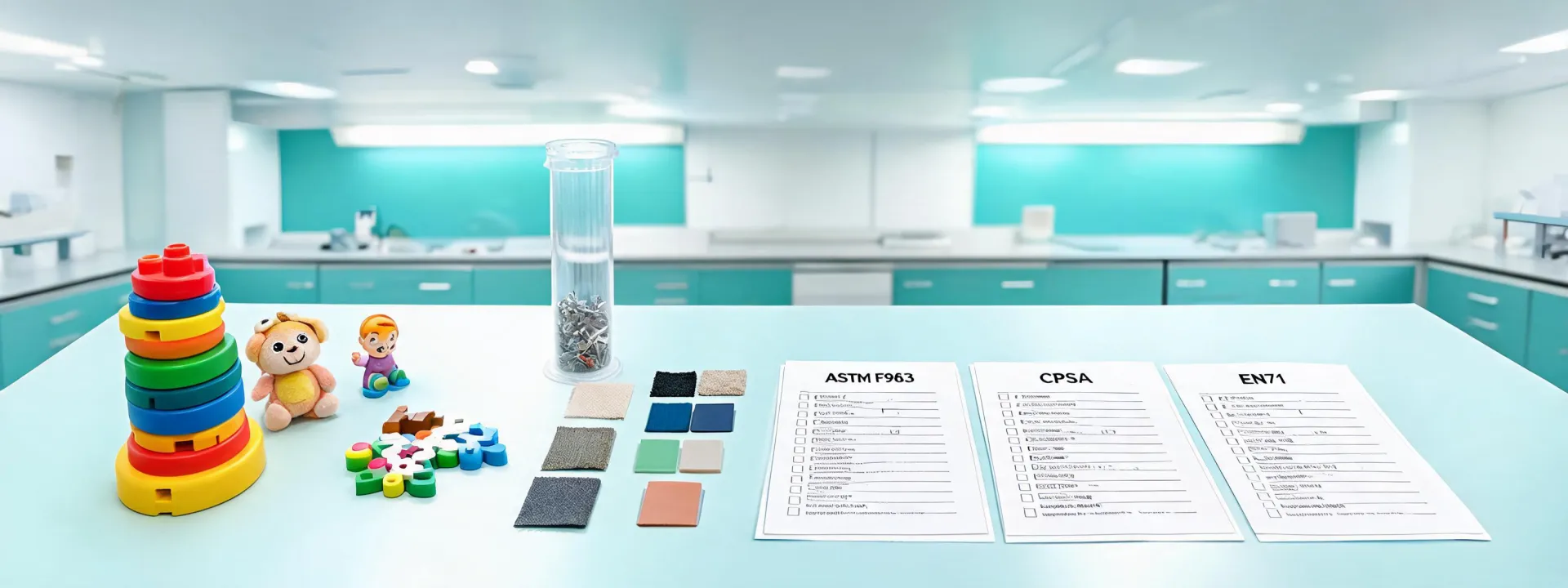
Safety is a practical system: correct age grading, material transparency, mechanical review, chemical limits, and clear buyer-facing language.
This table is written as a merchandising and documentation guide. It helps teams understand what each standard usually supports before they request product-specific files.
| Review area | What buyers confirm | Typical product relevance |
|---|---|---|
| ASTM F963 | Mechanical, physical, flammability, and selected chemical requirements for toys sold in the United States. | STEM kits, fidgets, pretend play, building sets |
| CPSIA | Children's product safety expectations including lead limits, tracking labels, and third-party testing context. | Retail programs and school supply channels |
| EN71 | European toy safety framework covering mechanical properties, flammability, and migration of certain elements. | Global catalog planning and distributor review |
| BPA-free / non-toxic | Material and finish language that should be tied to the exact product construction and age range. | Baby-adjacent toys, sensory pieces, washable items |
Parents and educators do not want dense compliance language at the point of purchase. They need the right summary, the right supervision cue, and a way to ask for deeper records when their channel requires it.
Age statements are treated as a decision tool, not decorative packaging copy. They guide small-part caution, skill fit, and expected play behavior.
For wood, plastics, silicone, fabric, and coatings, buyer-facing language stays connected to the actual material route and available documentation.
Classroom, therapy, retail sample, and home use can create different cleaning, supervision, and replacement needs. We help surface those differences early.
Support teams can explain terms like CPSIA, ASTM F963, EN71, BPA-free, and non-toxic without overstating what a label means.
Send the collection name, market, age range, and review question. We will route your request toward the right safety or merchandising documentation.